


Discover AIS
Solutions
Frames
Contact Us
AIS Windows (Owned by AIS Glass Solutions Ltd) 17F, New Industrial Town, Industrial Area, Rajiv Gandhi Colony, New Industrial Town, Faridabad Haryana 121001
 1800 8888888
Mon - Fri (10:00 AM – 7:00 PM)
Sat - Sun (10:00 AM – 06:00 PM)

A modern, comfortable, and peaceful city life is what most people want to ensure for their near and dear ones. However, ‘city’ and ‘modernity’ have presented people with modern lifestyle challenges like noise pollution.Be it an office or home, coping with noise pollution has become a way of life these days. By installing Soundproof Doors and Windows you can minimize noise pollution. These acoustic doors and windows offer better safety and performance when compared to tempered and annealed glass.
So, what is noise pollution? Sound, a common feature of our life and the means of communication, is pleasant when low, and becomes noise when loud. So, unpleasant and unwanted sounds can be defined as noise pollution, leading to various problems such as poor concentration, productivity losses in the workplace, communication difficulties, fatigue from lack of sleep, cognitive impairment, tinnitus and hearing loss, etc.
Soundproof glass window treatment is the best way to combat total noise intrusion in your personal spaces while improving your concentration, memory, performance, and a general sense of well-being.
AIS Windows designs the best soundproof doors and windows with best-in-class insulation technology to keep the environment of your homes and offices calm and peaceful. When installed with a special noise-canceling laminated glass, acoustic doors and windows reduce the noise intrusion by up to 42 decibels.
AIS Windows’ soundproof doors and windows for home are made up of two major components – the window frame and the glass, both loaded with incredible aesthetic and noise-canceling capabilities to bring down all the unwanted and unpleasant noises.
Two panes of the premium quality laminated glass sandwiched between a special PVB interlayer blocks off the noise. These soundproof windows for homes can block out 90% of external noise, which is an additional 60% over an ordinary 5 mm glass pane.
AIS Windows provide premium quality soundproof glass for home in a wide range of sizes and thicknesses to help protect customers from the harmful noise that invisibly penetrate their spaces.
What’s more, we also make sure that all our sound proof doors for home are fusion-welded and double-sealed to the glass, putting into use the highest quality silicone sealants. Thus, the soundproof office door and soundproof door with window treated this way get airtight, and this exemplary combination proves to be a perfect noise-reduction solution for your spaces.
Both anodised and painted aluminium should be cleaned on a regular basis. For smaller towns and areas in the interior parts of the country that are not subjected to aggressive elements like air pollution or salty air, it is sufficient to clean the aluminium whenever you clean the glass. Warm water should be used with a dilute of a non-aggressive, non-acetous detergent without ammonia for cleaning the aluminium. Then you should thoroughly rinse the aluminium with clear water and dry using an absorbing cloth. In urban areas or areas near to the sea, the aluminium should be cleaned more often and more thoroughly. Areas that are not exposed to rainfall should be cleaned more frequently than other surfaces. If water and mild detergents are not enough to clean the aluminium fenestrations there are detergents that have been specially developed for aluminium surfaces. These detergents contain light abrasive elements and can be used with a synthetic cleaning cloth. In all cases it is important to completely rinse surfaces with clear water and dry them thoroughly, especially the corners and the bottom profile. In order to protect and increase the life cycle of the aluminium, it may be treated with a very thin clear
coat of water resistant film available.
Following colours are available:
Anodised finish
The anodising process is carried out according to the EWAAEURAS regulations.
Painted finish:
The painting process is carried out in accordance to Qualicoat regulations.
Metals
When two metals of differing electro-negativity values come into contact in humid conditions, an electrical couple is formed giving rise to oxidizing effects at the expense of electro-negative metal of the couple. In order to avoid severe corrosion effects, an insulating barrier should be placed between the two metals. Contact with stainless steel has not been found to be harmful to aluminium to date. Contact with copper and its alloys is extremely harmful to aluminium. It is absolutely necessary to insulate these two metals. Lead should be insulated as well.
Timber
Most timbers have no harmful effects on aluminium. Some such as walnut however, produce acids which attack and damage aluminium. These effects occur especially in humid conditions or when the timber is not sufficiently dry. Insulation is recommended by using a bituminous paint. When you treat timber against humidity and insects you should check that the chemical substances used in the treatment are not harmful to aluminium. Products containing copper salts, mercury salts, and fluoride compounds are very harmful to aluminium and should be avoided.
Lime/Cement
In humid conditions, limestone or cement reacts with aluminium (even when anodized) revealing superficial white spots on the surface of the metal after cleaning. It is advisable to protect the aluminium during installation with protective foil.
Aluminium has the capability of being extruded into complex shapes to exact tolerances. Aluminium can be formed into literally thousands of unique profiles, each one able to meet a number of specific structural and aesthetic requirements. It is this capability to provide simple elegant solutions to extremely complex design problems that has led to aluminium’s enduring appeal. Aluminium is chosen for outdoor use because it is a stable, corrosion-resistant and light weight metal. One of aluminium’s primary appeals to a specifier is its exceptional strength to weight ratio. At 2.7g/cm2, aluminium is 66% lighter than steel. It is also far less susceptible to brittle fractures. Indeed, when aluminium and steel structures are compared, aluminium’s greater modulus of elasticity means that weight ratios of 1:2 are easily attained. It can also be processed at high cutting speeds and welded connections are not necessary. These advantages help to reduce fabrication time. Constructions are realized with aluminium profiles extruded in the alloy EN AW 6060 according to EN 755-1. The mechanical characteristics conform to the standard EN 755-2, with a modulus of elasticity of 70GPa.
The tolerances are based on EN 755-3
uPVC frames should be cleaned at periodic intervals to maintain their original appearance.
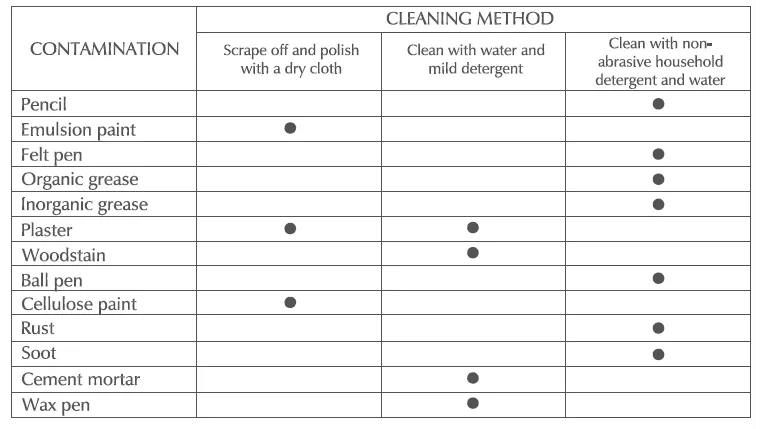
The frequency depends upon the geographical location and or the ambient atmosphere but as a general rule the frames should be cleaned whenever the glass is cleaned. The best method of cleaning is to use a clean cloth and a solution of detergent, diluted to the normal concentration for washing-up. If the surface is excessively dirty, it should be cleaned as above. If any unsightly stains remain, then a mild household non-scouring cream should be applied to remove the stains. Abrasive materials should not be used for any cleaning purpose because of scratching of the surface. Especially avoid the use of steel wool pads, as these might cause permanent stains.
The heat transfer coefficient (k- or U- value) is the amount of heat in watts per unit of time, which is transferred through 1 sq.m of glass surface per degree Kelvin difference between internal and external temperature. A measure of the rate of non-solar heat loss or gain through a material or assembly. The lower a window’s U-value, the less non-solar heat it transmits.
The aspect ratio of of any item is the proportional relationship between its width and its height. It is commonly expressed as two numbers
separated by a colon, as in 16:9. In case of windows it purely depends on the window sizes which are given by the architects/ designers/ specifiers. A Fabricator can always refer to the max & min size limitations given by AIS in the guidelines. It plays a major role in the structural stability & functioning of the windows. For e.g. in casement system the recommended aspect ratio is 1:1.5. Whereas in Sliding Height to Width Ratio should be less than 1:2.5